
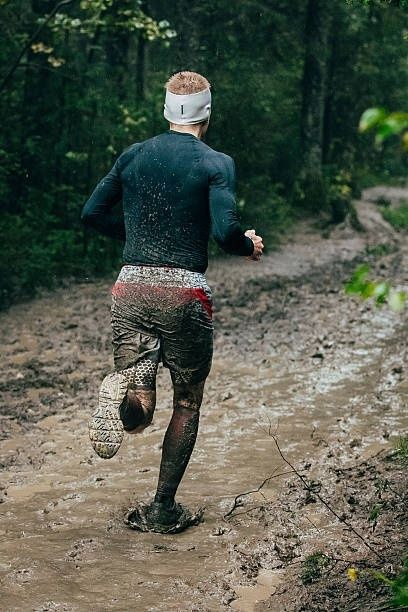
Why Your Winter Trail Shoes Hate Your GPS Watch
Few things are more demoralising than watching a familiar autumn road route turn into a disappointing number on a GPS watch. A pace that felt comfortable on dry tarmac can collapse when the surface becomes wet, rutted and covered with leaves. The immediate temptation is to push harder, chase the old split and treat every muddy kilometre as evidence that fitness is slipping.
That interpretation misses the point. GPS pace is an external measurement, and uneven ground constantly changes the amount of distance covered with each stride. A sharp climb, a slippery root or a cautious descent can make the same aerobic effort look dramatically slower. On trails, the better question is not “How fast am I going?” but “How well am I moving through this terrain?” Running by perceived effort allows breathing, muscular fatigue and balance to guide the session. Rather than a failed road workout, a wet trail run becomes a dynamic neuromuscular workout that develops skills the pavement rarely demands.

The Biomechanics of Running Over Slick Mud and Roots
Road running rewards repetition. The surface is predictable, the foot usually lands in a similar position and propulsion is directed mainly forwards. Trails are different. Each step requires a rapid decision about where to place the foot, how much force to apply and how to keep the body moving when the ground shifts beneath it. The ankles, hips and trunk make constant small corrections, turning an ordinary run into a series of controlled balance challenges.
Wet roots, hidden stones and autumn mud expose weaknesses that may remain invisible on smooth asphalt. The smaller stabilising muscles around the ankle and foot help control unwanted rolling, while the gluteal muscles and deep core work to keep the pelvis level. Proprioception, the body”s awareness of joint position and movement, becomes especially important when leaves conceal the exact shape of the trail. Checking an Authoritative Source for local route information can also help runners understand the terrain before training on it. Physiotherapy guidance for hill runners highlights exercises such as single-leg balance and step-ups because controlled loading and knee alignment help build the strength and coordination needed for demanding terrain. The goal is not to eliminate every wobble. It is to improve the ability to respond to one without losing rhythm.
Stride mechanics should also become more compact. A slightly higher cadence and shorter stride reduce the time the foot spends reaching out in front of the centre of gravity. This makes it easier to place the foot beneath the body and adjust quickly if the ground is slick. On descents, resist the urge to brake with long, stiff steps. Keep the knees soft, maintain a modest forward inclination from the ankles and allow the feet to land quietly. Useful trail habits include:
- Shortening the stride before a slippery section rather than reacting after a slide begins.
- Keeping the centre of gravity over the footstrike instead of reaching downhill.
- Scanning several metres ahead to identify roots, puddles and changes in surface.
- Using the arms for balance, with relaxed shoulders and hands that can respond naturally.
This variety can build structural resilience, although it is not a guarantee against injury. Repetitive road running can overload tissues when the same forces are repeated without enough recovery, while trails distribute demands across more planes and muscle groups. However, uneven terrain also increases the risk of ankle rolls and falls, particularly when fatigue compromises concentration. Progress gradually, choose suitable footwear and treat technical ground as a skill session rather than a test of toughness.
Mastering Rate of Perceived Exertion Across Shifting Terrain
Rate of Perceived Exertion, or RPE, is a simple 1-to-10 scale that describes how hard the whole effort feels. It combines breathing, muscular strain, concentration and the effects of sleep, nutrition, weather and accumulated fatigue. This matters because a fixed pace measures what happens outside the body, while RPE reflects what the body is actually experiencing. A muddy climb can demand the same aerobic effort as a much faster section on flat asphalt.
Heart rate can add useful context, but it is not infallible. Cold, stress, dehydration and fatigue can change the relationship between heart rate and effort, and short bursts of climbing may feel extremely hard before the heart-rate display catches up. RPE is immediate and practical. It helps prevent the common winter mistake of forcing a road pace through conditions that require more muscular control and concentration. GPS remains valuable for mapping, recording overall duration and reviewing long-term trends, but it should become a secondary tool during technical running.
A useful trail scale looks like this:
| RPE | Trail experience | Typical use |
|---|---|---|
| 3 to 4 | Very comfortable, relaxed breathing and easy conversation | Recovery running, warm-ups and technical route familiarisation |
| 4 to 5 | Easy aerobic work, steady breathing with plenty in reserve | Long runs and most winter base sessions |
| 6 to 7 | Controlled but purposeful, conversation becomes shorter | Steady sections, sustained climbs and moderate race preparation |
| 7 to 8 | Hard, focused effort that can be maintained for limited periods | Hill repetitions or strong trail intervals on safe ground |
| 8 to 9 | Very hard, with significant recovery required | Short efforts only, ideally on predictable terrain |
On a flat, firm road, RPE 5 might correspond to a familiar easy pace. On a muddy path, the same RPE may produce a much slower kilometre because every foot placement costs more attention and stabilising effort. On an incline, power hiking can be the most efficient way to remain within the intended effort range. Conversely, a smooth descent may allow faster movement without increasing aerobic demand, although muscular braking can still create substantial fatigue.
When tackling rugged regional paths such as those ascending through Cave Hill Country Park, maintaining a steady heart rate requires listening to breathing patterns rather than digital clocks. A practical cue is to begin climbs at RPE 5 or 6, keeping enough reserve to handle the upper section without sprinting. If breathing becomes ragged or foot placement becomes careless, reduce the effort immediately. The strongest winter runners are not those who never slow down, but those who can adjust before fatigue turns into poor mechanics.
Four Practical Drills to Build Wet-Trail Confidence
Confidence on wet trails comes from repeated exposure supported by simple strength and balance work. These drills should complement running, not replace a gradual return to outdoor surfaces. Begin on stable ground, use support when necessary and stop if pain appears. The aim is controlled movement, not exhaustion before the run has started.
A short routine can be completed two or three times each week before an easy session. Keep the movements precise and progress only when the current version feels reliable.
- Single-leg balance. Stand tall on one leg for up to one minute, keeping the knee aligned over the second and third toes. Progress by moving the free leg, tracing a clock face with the toe or briefly closing the eyes. Complete two or three rounds per side, using a wall or rail for safety.
- Step-ups. Step onto a low platform and drive through the supporting foot while keeping the knee from falling inward. Lower slowly and repeat for 8 to 12 repetitions per leg. Several controlled sets are more valuable than rushing through a high number.
- Quick-feet cadence. On a flat, clear surface, run in place or take very short forward steps for 15 to 20 seconds. Keep the feet light and the cadence quick, then recover while walking. This mimics the rapid adjustments needed on a wet woodland descent without introducing unnecessary speed.
- Trunk and landing control. Hold a tall, braced posture while performing small alternating step-downs or gentle hops onto the same spot. Keep the pelvis level and prevent the knee from collapsing inward. Start with step-downs before adding hops, especially if ankle control is limited.
These exercises develop different qualities. Balance drills challenge proprioception, step-ups build single-leg strength and controlled loading, quick feet improve the ability to reposition the legs and trunk work helps preserve an upright posture when the surface surprises you. The progression should be gradual: first stationary balance, then controlled stepping, then small dynamic movements, followed by brief application during an easy trail run.
Use the first five to ten minutes of a warm-up for gentle jogging, ankle circles and leg swings. Add two rounds of balance and step-ups, then finish with three short quick-feet efforts. Save more demanding hops for days when the ankles and calves feel fresh. Confidence is built through consistency, and a drill that is repeated calmly each week is more useful than an ambitious session that leaves the lower legs sore.
Adapting Your Weekly Mileage and Mental Strategy
Winter is a good time to replace rigid weekly distance targets with total time on feet. A 60-minute outing may include running, power hiking, brief pauses to negotiate a technical section and slower descents. Those minutes still train the aerobic system and impose meaningful muscular demands. Chasing a mileage number in poor conditions can encourage unnecessary intensity, increase fall risk and make recovery harder to judge.
Plan around purpose rather than distance. An easy trail outing might sit at RPE 4 to 5, while a separate session can include a few controlled uphill efforts. Avoid turning every muddy run into a hard workout. The distinction matters because structural and neuromuscular fatigue can accumulate even when average heart rate appears modest. If soreness changes your stride, reduce duration or choose a flatter, more predictable route.
Urban-adjacent woodland networks can make this approach especially practical around major cities. Belfast, for example, combines accessible green spaces with hills and varied surfaces, giving runners the chance to build trail skills without committing to a remote expedition. Runners exploring the varied terrain surrounding Belfast often discover that measuring winter outings in minutes rather than miles keeps enthusiasm high.
- Set a time range for the session and allow the terrain to determine the distance.
- Keep at least one genuinely easy day after a demanding hill or technical run.
- Change out of wet clothing quickly and dry shoes with newspaper or airflow, not direct heat.
- Inspect the outsole after each run and remove mud before it hardens.
- Refuel with a balanced meal containing carbohydrate and protein, particularly after longer outings.
- Record effort, weather, surface and recovery alongside distance so future sessions have useful context.
A sensible winter plan is specific without being rigid. Build duration progressively, maintain strength work and use cross-training when heavy rain, ice or fatigue makes running unwise. A short break is not a collapse in fitness, and a cautious week can protect the consistency that matters most. The objective is to arrive at spring healthy, coordinated and ready to reintroduce road pace gradually.
Step Off the Pavement and Run Free This Winter
Ditching split pace does not mean abandoning performance. It means choosing a measurement that matches the environment. RPE helps you regulate effort through climbs, mud and descents, while shorter strides, active balance and quick foot placement turn unstable ground into useful athletic practice. GPS can still record the route and reveal progress over time, but it no longer gets to define whether a winter run was successful.
The rewards extend beyond the colder months. Better ankle control, stronger single-leg mechanics, improved proprioception and greater comfort with changing rhythm can make road running feel more economical when spring races return. Lace up with suitable traction, select a manageable route, set a time-based goal and let the terrain dictate the pace. The mud is not slowing your training down. It is teaching your body to move with more intelligence.





Leave a Reply